
Button
Unknown Artist
9th–10th century
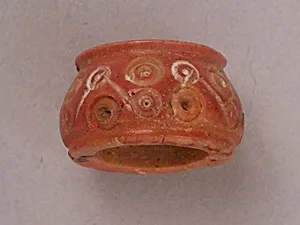
Medium
Bone; tinted, incised, and inlaid with paint
Dimensions
H. 5/16 in. (0.8 cm) Diam. 9/16 in. (1.4 cm)
Classification
Ivories and Bone
Department
Islamic Art
Museum
Metropolitan Museum of Art, New York, NY
Credit
Rogers Fund, 1938
Accession Number
38.40.2
Rights
Public Domain
Art Historical Context
This delicate bone button, crafted in the 9th–10th century during the height of the Islamic Golden Age, offers a glimpse into the everyday artistry of the Abbasid. Measuring just 5/16 inch high and 9/16 inch in diameter, it was likely used to fasten garments or adorn personal items, transforming a humble utilitarian object into a testament to skilled craftsmanship. Housed in the Metropolitan Museum of Art's Islamic Art department, it entered the collection through the Rogers Fund in 1938. The button's medium—bone tinted for color, incised with fine carvings, and inlaid with paint—highlights sophisticated techniques common in Islamic ivories and bonework. Artisans meticulously etched designs into the surface, filling the grooves with pigment to create vibrant, enduring patterns that resisted wear. This labor-intensive process reflects the cultural value placed on beauty in daily life, where even small accessories blended functionality with aesthetic refinement. As a survivor from over a millennium ago, this unassuming button underscores the Islamic world's mastery of portable arts. Bone, abundant and workable, was ideal for intricate personal objects traded across vast empires, from Baghdad to Cordoba. It invites us to appreciate how Islamic artisans elevated the ordinary, weaving artistry into the fabric of society.