
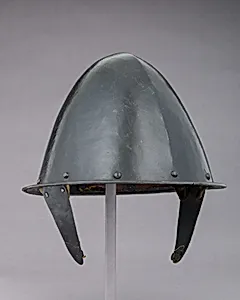
Cabasset
Unknown Artist
17th century
Medium
Steel, leather
Dimensions
H. 11 3/4 in. (29.8 cm); W. 9 7/8 in. (25.1 cm); D. 10 7/8 in. (27.6 cm); Wt. 2 lb. 3 oz. (992 g)
Classification
Helmets
Culture
possibly British
Department
Arms and Armor
Museum
Metropolitan Museum of Art, New York, NY
Credit
Gift of William H. Riggs, 1913
Accession Number
14.25.487
Rights
Public Domain
Art Historical Context
Step into the riveting world of 17th-century warfare with this striking *Cabasset*, a helmet crafted from durable steel reinforced with leather. Measuring just 11 3/4 inches high, 9 7/8 inches wide, and weighing a nimble 2 pounds 3 ounces, its compact design speaks to practicality for the foot soldier. The cabasset's distinctive open-faced form, with a rounded skull and flared brim, offered essential protection for the head and neck while maintaining visibility and ventilation on the battlefield. Possibly of British origin, this helmet hails from an era of intense conflict, including the English Civil Wars, when such armor was vital for pikemen and musketeers facing musket fire and close-quarters combat. Steel's hammered construction provided robust defense against slashes and blows, while leather straps ensured a secure fit—hallmarks of the period's innovative arms-making techniques blending functionality with emerging mass production. A generous gift from William H. Riggs in 1913, this piece now graces the Metropolitan Museum of Art's Arms and Armor Department. It invites us to ponder the human stories behind the metal: the courage of anonymous warriors whose lives depended on such unyielding craftsmanship.