
Cabasset
Unknown Artist
ca. 1570
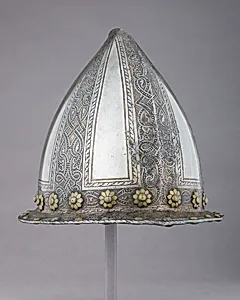
Medium
Steel, brass, gold, leather
Dimensions
H. 9 1/8 in. (23.2 cm); W. 9 7/16 in. (24 cm); D. 11 15/16 in. (30.3 cm); Wt. 4 lb. 11 oz. (2126 g)
Classification
Helmets
Culture
Italian
Department
Arms and Armor
Museum
Metropolitan Museum of Art, New York, NY
Credit
Gift of William H. Riggs, 1913
Accession Number
14.25.630
Rights
Public Domain
Art Historical Context
Step into the riveting world of 16th-century European warfare with this Italian *cabasset*, a lightweight open-faced helmet dating to around 1570. Crafted during the late Renaissance, when Italy was a hotbed of military innovation amid conflicts like the Italian Wars, the cabasset was favored by infantry and light cavalry for its balance of protection and mobility. simple, bowl-shaped design with a peaked visor offered defense against downward sword strikes and arrows, embodying the era's shift toward practical battlefield gear over ornate knightly armor. Forged primarily from steel for durability, this example is elevated by luxurious accents of brass, gold, and leather, suggesting it belonged to an officer or was intended for ceremonial use. At just over 9 inches high and weighing about 4.5 pounds, it was wearable for extended combat without excessive fatigue. The intricate metalworking highlights Italian artisans' mastery of embossing and gilding techniques, blending functionality with subtle elegance. A generous gift from William H. Riggs in 1913, this cabasset now graces the Metropolitan Museum of Art's Arms and Armor Department, offering a tangible link to the soldiers who shaped Europe's turbulent history. Imagine donning it amid the clash of Renaissance armies—history feels remarkably close!