
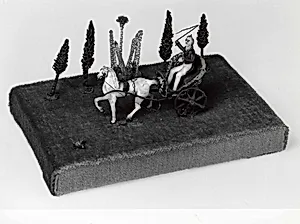
Cabriolet with Driver
Unknown Artist
mid-19th century
Medium
Figure, horse, and cabriolet of lampworked glass (opaque white, yellow, yellow-orange, green, dark green, blue, light blue, dark blue, brown, dark brown, transparent amber, and colorless), composition material, iron wire, wood, fabric. Assembled.
Dimensions
7.6 x 18.7 x 12.4 cm
Classification
Glass
Culture
probably French, possibly British
Department
Robert Lehman Collection
Museum
Metropolitan Museum of Art, New York, NY
Credit
Robert Lehman Collection, 1975
Accession Number
1975.1.1574
Rights
Public Domain
Tags
Art Historical Context
Step into the elegant world of mid-19th-century urban life with *Cabriolet with Driver a delightful miniature model from the Robert Lehman Collection at Metropolitan Museum of Art. intricate assemblage captures a horse-drawn cabriolet—a light, two-wheeled popular among the fashionable elite—with its driver at the reins. Measuring just 7.6 x 18.7 x 12.4 cm, the scene bursts with color: the horse, figures, and vehicle are fashioned from lampworked glass in opaque whites, vivid yellows and oranges, lush greens, striking blues, earthy browns, and transparent amber, all meticulously assembled with iron wire, wood, fabric, and composition materials. Likely French or possibly British, it reflects the craftsmanship of an unknown artist during the Victorian era. Lampworking, the technique used here, involves softening glass rods over a flame to shape delicate, realistic forms—perfect for such detailed vignettes. This method flourished in 19th-century Europe, especially in France, where glass artists created enchanting figurines, paperweights, and models as decorative novelties or toys. The cabriolet's gleaming wheels and poised horse evoke the bustling streets of Paris or London, when these carriages symbolized speed and sophistication amid the rise of modern cities. As a glasswork gem in The Met's collection (acquired 1975), this piece offers a tangible glimpse into everyday transport and artistry, blending whimsy with historical precision for visitors of all ages.