
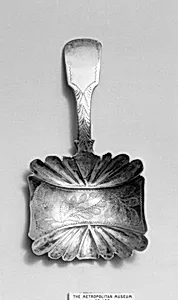
Caddy spoon
1827–28
Medium
Silver
Dimensions
Length: 2 3/4 in. (7 cm)
Classification
Metalwork-Silver
Culture
British, Birmingham
Department
European Sculpture and Decorative Arts
Museum
Metropolitan Museum of Art, New York, NY
Credit
Gift of Mrs. Samuel P. Avery, 1897
Accession Number
97.2.179
Rights
Public Domain
Art Historical Context
This delicate silver caddy spoon, around 1827–28 in Birmingham, England, by the probable maker J.C., exemplifies the exquisite metalwork of Britain's Industrial Revolution era. Measuring just 2¾ inches (7 cm) in length, it was designed for a precise purpose: scooping loose tea leaves from a locked tea caddy, a luxurious household item symbolizing status amid Britain's booming tea culture. Birmingham, a hub of silversmithing innovation, produced such finely wrought objects using advanced techniques like stamping and chasing, making high-quality silver accessible beyond elite workshops. As a piece of European decorative arts, this spoon highlights the blend of functionality and subtle elegance in Regency-to-Victorian silverware. Its small scale and hallmarking reflect the era's attention to craftsmanship and maker's marks, ensuring authenticity for discerning collectors. Tea, imported at great expense from Asia, was a social ritual, and tools like this elevated everyday indulgence into refined domestic art. Today, gifted to the Metropolitan Museum of Art in 1897 by Mrs. Samuel P. Avery, it invites us to savor the intimate history of 19th-century British life—where even a tiny spoon carried cultural weight.