
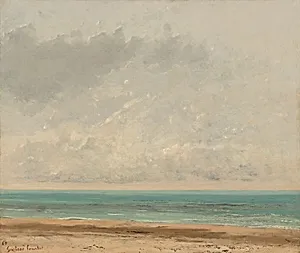
Calm Sea
1866
Medium
oil on canvas
Dimensions
overall: 54.1 x 63.9 cm (21 5/16 x 25 3/16 in.) framed: 69.9 x 80.3 x 5.1 cm (27 1/2 x 31 5/8 x 2 in.)
Classification
Painting
Department
CF
Museum
National Gallery of Art, Washington, D.C.
Credit
Collection of Mr. and Mrs. Paul Mellon
Accession Number
1985.64.10
Rights
Public Domain
Art Historical Context
**Calm Sea** (1866) by Gustave Courbet invites visitors into a serene marine vista, rendered in oil on canvas at an intimate scale of 54.1 x 63.9 cm. Housed in the National Gallery of Art's collection, generously gifted by Mr. and Mrs. Paul Mellon, this painting exemplifies Courbet's mastery of landscape during his mature career. As a pioneer of Realism, Courbet rejected the dramatic fantasies of Romanticism, instead capturing nature's unvarnished truth with bold, direct observation. Painted amid the vibrant cultural shifts of mid-19th-century France under Napoleon III, *Calm Sea* reflects Courbet's fascination with the elemental forces of the natural world. His thick impasto technique—layering paint with a palette knife—brings the glassy surface of the water and subtle atmospheric haze to life, emphasizing texture and light over idealization. This approach made his seascapes groundbreaking, influencing later Impressionists while asserting art's power to depict everyday beauty. Though small in size, the work's tranquil mood offers a meditative pause, underscoring Courbet's belief in painting from direct experience. A gem of Realist innovation, it reminds us how a quiet sea can evoke profound stillness. (198 words)
About the Artist
Gustave Courbet · 1819–1877
Jean Désiré Gustave Courbet (1819-1877) was a French painter who revolutionized 19th-century art as the founding figure of the Realism movement. Born in Ornans, a small town in the Doubs region of France, Courbet came from a prosperous farming family with anti-monarchical roots—his maternal grandfather had participated in the French Revolution. This background shaped his lifelong commitment to dep...