
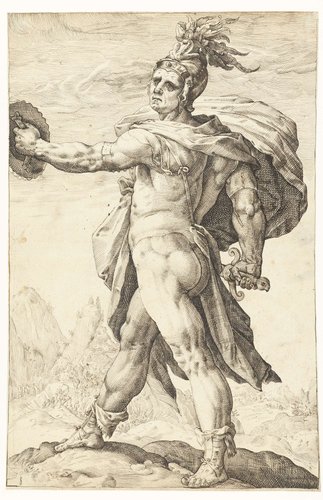
Calpurnius
Medium
pen
Dimensions
232; 321
Rights
Public Domain
About this artwork
pen in bruin
Art Historical Context
**Calpurnius** (1602) by Lucas van Haelch is a striking pen drawing on a generous sheet measuring 321 mm high by 232 mm wide. Executed in brown ink—known as "pen in bruin" in Dutch—this work captures the artist's command of line during the early 17th century, a time when the Northern Netherlands were transitioning from Renaissance precision to Baroque expressiveness. Van Haelwech, likely a draftsman from the Low Countries, created this piece amid a flourishing tradition of ink studies that valued spontaneity and detail. The title *Calpurnius* evokes classical Roman antiquity, a popular theme for artists drawing inspiration from historical and literary figures. Brown ink, derived from natural pigments like oak galls, lent a warm, versatile tone ideal for subtle shading and hatching techniques. Such pen works were often prized as standalone pieces, showcasing virtuosity without the aid of color, and served as preparatory sketches or collector's items in an era of growing connoisseurship. This intimate drawing invites you to trace van Haelwech's fluid strokes, revealing how everyday materials produced enduring artistry. A window into 1602's cultural curiosity, *Calpurnius* reminds us of drawing's timeless power to distill history on paper.