
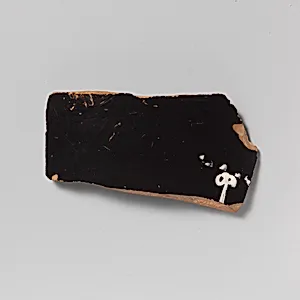
Calyx-krater, fragments
Unknown Artist
ca. 360–340 BCE
Medium
Terracotta
Dimensions
c: greatest H.3 3/4 in. (9.5 cm); greatest width: 2 in. (5.1 cm)
Classification
Vases
Culture & Period
Greek, South Italian, Apulian · Late Classical
Department
Greek and Roman Art
Museum
Metropolitan Museum of Art, New York, NY
Credit
Rogers Fund, 1910
Accession Number
10.210.17c
Rights
Public Domain
Art Historical Context
This delicate fragment of a calyx-krater, a bell-shaped mixing bowl used in ancient Greek symposia to wine with water, hails from South Italy's Apulian region around 360–340 BCE. Craft in terracotta during the Late Classical period, exemplifies the vibrant pottery tradition of Greek colonists in Magna Graecia. Apulian vases like this one were often large, ornate vessels employed both in daily rituals and as grave offerings, reflecting the region's prosperous workshops that produced some of the finest red-figure ceramics of the era. Though only a small piece survives—measuring about 3¾ inches high and 2 inches wide—this fragment hints at the original's artistic ambition. Apulian potters favored dynamic scenes from mythology, theater, or daily life, painted in rich reds, blacks, and whites with added details like gilding for luxury. The calyx-krater's elegant shape, widening like a calyx flower, made it ideal for display, underscoring the cultural fusion of Greek artistry with Italic influences. Acquired through the Rogers Fund in 1910 and now in the Metropolitan Museum of Art's Greek and Roman Art Department, this shard invites us to imagine the full vessel's grandeur, connecting us to the lively banquets and beliefs of ancient South Italy.