
北魏/北齊 彩繪陶駱駝俑|Camel
Unknown Artist
mid-to-late 6th century
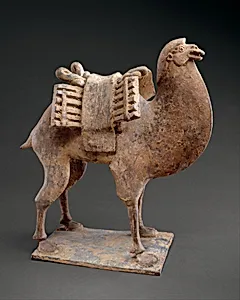
Medium
Earthenware with traces of pigment
Dimensions
H. 9 3/4 in. (24.8 cm); L. 9 1/2 in. (24.1cm)
Classification
Tomb Pottery
Culture & Period
China · Northern Wei (386–534)–Northern Qi (550–77) dynasty
Department
Asian Art
Museum
Metropolitan Museum of Art, New York, NY
Credit
Rogers Fund, 1928
Accession Number
28.121
Rights
Public Domain
Tags
Art Historical Context
This charming painted earthenware camel figurine, just under 10 inches tall, hails from China's Northern Wei (386–534) to Northern Qi (550–77) dynasties in the mid-to-late6th century. Craft as tomb pottery (mingqi), it was placed in burials to accompany the deceased into the afterlife, providing companionship, transportation, and a touch of the exotic. Camels like this one symbolized the bustling Silk Road trade routes, evoking the arrival of Central Asian merchants and their caravans laden with goods from afar. The figurine's low-fired earthenware body, with faint traces of original pigments, reflects the period's practical yet expressive ceramic techniques. Artisans molded the camel in a lively, striding pose, capturing its humped silhouette and detailed features with a naive realism typical of tomb wares—prioritizing symbolic function over refined artistry. These objects highlight the Northern Dynasties' cultural fusion of Han Chinese traditions with steppe influences, amid political fragmentation and Buddhist expansion. Acquired through the Rogers Fund in 1928, this piece from the Metropolitan Museum of Art's Asian Art collection offers a window into ancient China's vibrant funerary customs and global connections, reminding us how everyday tomb guardians bridged worlds both living and eternal.