
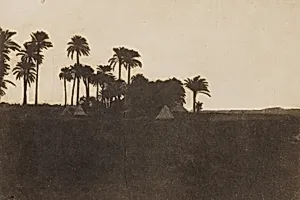
Camp a Accaba
May 16, 1852
Medium
salted paper print
Dimensions
image: 14 × 21 cm (5 1/2 × 8 1/4 in.) sheet: 31.6 × 44.7 cm (12 7/16 × 17 5/8 in.)
Classification
Photograph
Department
CPH
Museum
National Gallery of Art, Washington, D.C.
Credit
Patrons' Permanent Fund
Accession Number
2018.173.1
Rights
Public Domain
Art Historical Context
Created on May 16, 1852, Ernest Benecke’s “Camp a Accaba” stands as a compelling example of early photography’s power to document distant places. At a time when the medium was barely a decade old, Benecke used the salted paper print process—one of the first negative-positive techniques—to capture a fleeting moment in a desert encampment. The soft, matte surface of the print lends the scene an intimate, almost hand-drawn quality that distinguishes these pioneering photographs from later, sharper albumen prints. Salted paper prints were prized for their subtle tonal range and direct connection to the paper itself, allowing photographers to produce unique impressions from paper negatives. Measuring just 14 by 21 centimeters, this work reveals the portability and immediacy that made the process ideal for travelers. Today, the photograph offers modern viewers a rare window into mid-nineteenth-century exploration, reminding us how quickly photography transformed the way the world could be seen and shared.