
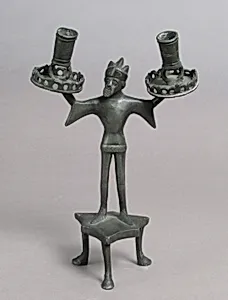
Candelabra
Unknown Artist
late 19th–early 20th century (15th century style)
Medium
Pewter
Dimensions
Overall: 9 5/8 x 6 5/16 x 3 7/16 in. (24.5 x 16 x 8.7 cm)
Classification
Metalwork-Copper alloy
Culture
German (?)
Department
Medieval Art
Museum
Metropolitan Museum of Art, New York, NY
Credit
Bequest of Henry Victor Burgy, 1901
Accession Number
01.23.2
Rights
Public Domain
Tags
Art Historical Context
This elegant pewter candelabra, crafted by an unknown artist in the late19th or early 20th century evokes the intricate metalwork of 15th-century Germany. Standing at just over 9 inches tall, with a compact base measuring about 6 by 3 inches, it exemplifies the historicist revival popular during that era, when artisans drew inspiration from medieval designs to celebrate Gothic and Renaissance traditions. Likely featuring male figures—hinted at by its thematic tags—the piece would have served both functional and decorative purposes in a domestic or ecclesiastical setting, holding candles to illuminate gatherings or altars. Pewter, a malleable copper alloy prized for its silvery sheen and durability, was a favored medium for such utilitarian yet artistic objects in German metalworking traditions. Though classified under Medieval Art at The Metropolitan Museum of Art, its modern creation reflects the 19th-century fascination with the past, blending old-world craftsmanship with contemporary techniques like casting and chasing. Bequeathed by Henry Victor Burgy in 1901, this candelabra offers visitors a tangible link to Europe's enduring love affair with medieval aesthetics, reminding us how history is continually reinterpreted. (Word count: 198)