
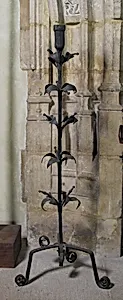
Candelabra
Unknown Artist
14th–15th century and later
Medium
Iron
Dimensions
H: 52in. (132.1cm)
Classification
Metalwork-Iron
Culture
French or Spanish
Department
The Cloisters
Museum
Metropolitan Museum of Art, New York, NY
Credit
The Cloisters Collection, 1947
Accession Number
47.101.75
Rights
Public Domain
Art Historical Context
This imposing iron candelabra, over 52 inches tall, hails from the 14th–15th with possible later additions, reflecting the enduring craftsmanship of French or Spanish metalworkers.oused in The Cloisters at the Metropolitan Museum of Art as part of the 1947 Cloisters Collection it exemplifies medieval metalwork designed for grandeur. Likely used in ecclesiastical settings like monasteries or cathedrals—or perhaps noble households—such pieces illuminated sacred spaces or grand halls, casting flickering light during evening rituals or feasts. Forged from durable iron, a material prized for its strength and availability in medieval Europe, the candelabra showcases skilled blacksmithing techniques. Artisans heated and hammered the metal into branching arms capable of holding multiple candles, often with riveted joints for stability. Iron's rustic patina and resistance to fire made it ideal for heavy-duty liturgical objects, contrasting with more delicate bronze or silver works reserved for altars. Its uncertain origins highlight the shared Gothic traditions across the Pyrenees, where functional art blended utility with subtle ornamentation. Visitors to The Cloisters can imagine this survivor of centuries lighting the shadowed stone vaults of a distant abbey, a testament to the anonymous makers who shaped daily medieval life.