
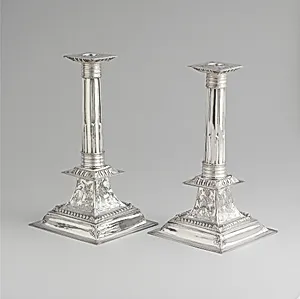
Candlestick
ca. 1705
Medium
Silver
Dimensions
Overall: 11 7/16 x 6 1/2 x 6 1/2 in. (29.1 x 16.5 x 16.5 cm); 25 6 oz. (808.3 g) Without bobeche: H. 10 15/16 in. (27.8 cm); 22 oz. 17 dwt. (710.9 g) Bobeche: 2 1/4 x 2 13/16 x 2 13/16 in. (5.7 x 7.1 x 7.1 cm); 3 oz. 3 dwt. (97.4 g)
Classification
Candlestick
Culture
American
Department
The American Wing
Museum
Metropolitan Museum of Art, New York, NY
Credit
Gift of Robert L. Cammann, 1957
Accession Number
57.153a, b
Rights
Public Domain
Tags
Art Historical Context
This elegant silver candlestick, crafted by New York silversmith Cornelius Kierstede around 1705, exemplifies early American colonial craftsmanship. Standing at nearly 11½ inches tall and weighing over 25 ounces, it features a removable bobeche—a drip pan for the candle—highlighting the functional yet luxurious design of household silver from the period. Adorned with finely chased motifs of human figures and birds, as suggested by its decorative tags, the piece reflects the silversmith's skill in blending utility with ornamentation. Silver was a prized medium in 18th-century America, symbolizing wealth and status among the merchant elite of New York and New England. Kierstede, active in this vibrant urban center, produced objects that rivaled European imports, showcasing techniques like casting, chasing, and engraving to create intricate surface details. This candlestick's robust form and precise proportions underscore the transition from utilitarian to refined domestic arts in the colonies. A generous gift to the Metropolitan Museum of Art's American Wing in 1957 by Robert L. Cammann, it offers visitors a tangible glimpse into colonial life, where such items illuminated social gatherings and dinners, blending artistry with everyday elegance.