
Candlestick
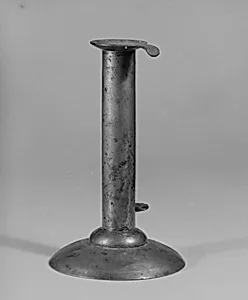
Medium
Tin
Dimensions
H. 6 in. (15.2 cm); Diam. 3 5/8 in. (9.2 cm)
Classification
Candlestick
Culture
American, Shaker
Department
The American Wing
Museum
Metropolitan Museum of Art, New York, NY
Credit
Friends of the American Wing Fund, 1966
Accession Number
66.10.31
Rights
Public Domain
Art Historical Context
This elegant tin candlestick, crafted by members of the United Society ofievers in Christ’s Secondaring—better known as the Shakersdates to between 1820 and 1860. Standing just 6 inches tall with a 3⅝-inch diameter base, its modest scale and gleaming metal surface exemplify the Shakers' commitment to functional beauty. Produced in their communal workshops across New England and the Midwest, such everyday objects were essential for illuminating the simple, orderly lives of Shaker villages. The Shakers, a celibate Christian sect founded in 18th-century England and flourishing in America, embraced a philosophy of simplicity, purity, and perfection in all things. Their designs rejected ornamentation in favor of honest materials and precise craftsmanship, turning utilitarian items like this candlestick into quiet masterpieces. Tin, lightweight yet durable, was a favored medium for Shaker wares, allowing for efficient production via techniques like spinning and soldering—skills honed in self-sustaining communities that sold goods to support their way of life. Housed in The Metropolitan Museum of Art’s American Wing, this candlestick offers a window into 19th-century Shaker culture, where even the humblest tools reflected spiritual ideals. Visitors can appreciate how such objects embodied the Shakers' motto: "Hands to work, hearts to God," blending practicality with profound aesthetic restraint.