
Candlestick
Unknown Artist
17th century
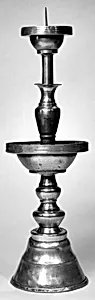
Medium
Pewter
Dimensions
H. 22 in. (55.9 cm); W. (at base) 6 1/8 in. (15.6 cm); W. (central dish) 6 1/2 in. (16.5 cm)
Classification
Metalwork
Culture & Period
China · late Ming (1368–1644) or early Qing (1644–1911) dynasty
Department
Asian Art
Museum
Metropolitan Museum of Art, New York, NY
Credit
Gift of Robert Hatfield Ellsworth, in honor of Jean Schmitt, 1981
Accession Number
1981.242.1
Rights
Public Domain
Art Historical Context
This elegant pewter candlestick, standing an impressive 22 inches tall, hails from 17th-century China during late Ming (1368–1644) or early Qing (164–1911) dynasty Crafted by an unknown artisan, its sturdy base (6⅛ inches wide) and central dish (6½ inches across) suggest practical design for holding candles in domestic or ceremonial settings. Pewter, an affordable alloy primarily of tin, was prized in China for its malleability and subtle sheen, allowing skilled metalworkers to create functional objects with refined proportions. Straddling the Ming-Qing transition—a time of political upheaval yet artistic continuity—this piece exemplifies Chinese metalwork's understated elegance. Ming craftsmanship emphasized harmony and balance, influences that persisted into the Qing era under Manchu rule. Such candlesticks illuminated scholarly studios, ancestral halls, or elite homes, blending utility with subtle luxury amid the dynasty's flourishing trade in metals. Today, this gift to the Metropolitan Museum of Art from Robert Hatfield Ellsworth in honor of Jean Schmitt (1981) offers a glimpse into everyday opulence, highlighting pewter's role as a democratic medium accessible beyond imperial porcelain or jade. A testament to anonymous mastery, it invites us to appreciate the quiet sophistication of China's material culture.