
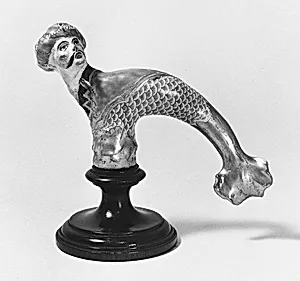
Cane handle
Medium
Hard-paste porcelain
Dimensions
Length: 6 1/4 in. (15.9 cm)
Classification
Ceramics-Porcelain
Culture
German, Thuringia, Kloster-Veilsdorf
Department
European Sculpture and Decorative Arts
Museum
Metropolitan Museum of Art, New York, NY
Credit
Gift of Irwin Untermyer, 1964
Accession Number
64.101.353
Rights
Public Domain
Tags
Art Historical Context
This exquisite cane handle, crafted around 1770 by the Klostereilsdorf Porcelainufactory in Thuring, Germany, exemplifies the height of 18th-century European porcelain. Nestled in the heart of porcelain-producing Saxony,oster-Veilsdorf a key rival to Me, specializing in finely modeledural works during the Rococo period. from hard-paste porcelain durable, translucent material perfected in Europe to mimic coveted Chinese imports—this 6¼-inch handle showcases the manufactory's mastery of technical innovation and whimsical design. The handle likely features lively motifs of men and fish, evoking themes of leisure or maritime life popular in decorative arts of the era. Artisans hand-sculpted the forms, then applied intricate enameling and gilding for vibrant colors and lifelike details, transforming a functional accessory into a status symbol for gentlemen's canes. Such pieces highlight porcelain's versatility beyond tableware, blending utility with sculptural elegance. A generous gift to the Metropolitan Museum of Art from Irwin Untermyer in 1964, this handle invites visitors to appreciate Thuringia's cultural legacy—where modest workshops produced luxury goods for Europe's elite, bridging craftsmanship and connoisseurship.