
Cane Violin
19th century
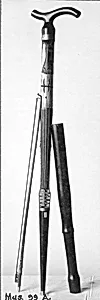
Medium
Mahogany, spruce, ebony, metal
Dimensions
L. 2 ft. 11 in., W. 1-3/4 in.
Classification
Chordophone-Bowed
Culture
German
Department
Musical Instruments
Museum
Metropolitan Museum of Art, New York, NY
Credit
The Crosby Brown Collection of Musical Instruments, 1889
Accession Number
89.4.950
Rights
Public Domain
Art Historical Context
The Cane Violin, created by German maker Moritz Wilhelm Glaesel in the 19th century, is a remarkable example of inventive musical craftsmanship. Measuring nearly three feet long yet just under two inches wide, the instrument is fashioned from mahogany, spruce, and ebony with metal fittings. Its slender, cane-shaped body allows it to serve as both a walking stick and a playable bowed chordophone, concealing its musical purpose within an everyday object. This design reflects the era’s taste for novelty instruments that combined utility with artistry. Glaesel’s careful choice of tonewoods preserves the resonant qualities needed for bowed string performance while maintaining the cane’s elegant, discreet profile. Such pieces appealed to traveling musicians and collectors who valued portability alongside fine craftsmanship. Acquired by the Metropolitan Museum of Art in 1889 as part of the Crosby Brown Collection, the Cane Violin invites visitors to consider how music-making once intersected with daily life in inventive and unexpected ways.