
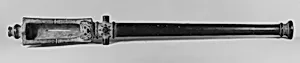
Cannon
Unknown Artist
ca. 14th century
Medium
Bronze
Dimensions
L. 37 7/16 in. (95.2 cm)
Classification
Metalwork
Culture & Period
Indonesia (Java) · Majapahit period (1296–1520)
Department
Asian Art
Museum
Metropolitan Museum of Art, New York, NY
Credit
Gift of Mr. and Mrs. Martin Lerner, in honor of Professor Samuel Eilenberg, 1986
Accession Number
1986.503
Rights
Public Domain
Art Historical Context
Nestled in the Metropolitan Museum of Art's Asian Art collection, this bronze cannon from 14th-century Java exemplifies the Majapahit period's (1296–1520) mastery of metalwork. Measuring 37 7/16 inches (95.2 cm) in length, it is a striking artifact of early artillery, cast in bronze—a medium prized for its durability and capacity to withstand the intense pressures of gunpowder combustion. The unknown artisan's skill highlights Java's advanced foundry techniques, likely involving complex molding processes that produced seamless, functional forms. During the Majapahit era, the Hindu-Buddhist empire dominated Southeast Asia, commanding vast naval fleets and engaging in expansive trade and warfare. Cannons like this one represent a pivotal technological leap, among the earliest firearms in the region, blending indigenous metallurgy with influences from Islamic gunpowder technology via trade routes. They underscore Majapahit Java's role as a maritime powerhouse, where such weapons fortified defenses and projected imperial might. This gift to the Met, honoring Professor Samuel Eilenberg, invites us to marvel at how a simple bronze tube revolutionized warfare and craftsmanship, bridging art and military history in Indonesia's golden age.