
Canopic jar of Nephthys
Unknown Artist
ca. 1981–1802 B.C.
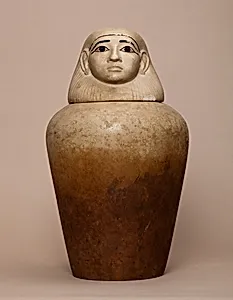
Medium
Indurated limestone, paint, linen
Dimensions
8 3/4 in. (22.3 cm)
Classification
Canopic jar, Nephthys
Period
Middle Kingdom
Department
Egyptian Art
Museum
Metropolitan Museum of Art, New York, NY
Credit
Rogers Fund, 1911
Accession Number
11.150.17e
Rights
Public Domain
Art Historical Context
Welcome to the Egyptian Art galleries at the Metropolitan Museum of Art where we encounter the **Canopic jar of Nephthys**, a poignant relic from Egypt's Middle Kingdom, Dynasty 12 (ca. 1981–1802 B.C.). Crafted by an unknown artist, this vessel stands just 8 3/4 inches tall and served a vital role in ancient funerary rituals. Canopic jars like this one housed the internal organs removed during mummification, protecting them for the afterlife. Nephthys, one the four protective goddesses (alongside Isis, Neith, and Selket), presided over the jar containing the lungs, symbolizing her role in safeguarding the deceased's breath and vitality. Carved from indurated limestone—a durable, hardened variety prized for its fine grain and resistance to decay—the jar was vividly painted and possibly lined with linen for added preservation. This combination of materials reflects Middle Kingdom advancements in stoneworking and pigmentation, where artisans achieved lifelike details on the goddess's serene face, evoking eternal guardianship. The subtle modeling and reserved elegance mark a shift from the more elaborate Old Kingdom styles, emphasizing spiritual potency over ostentation. Acquired through the Rogers Fund in 1911, this jar offers a window into the Egyptians' profound beliefs in immortality and divine protection. Imagine the rituals surrounding its burial in a tomb, ensuring the ka (spirit) could thrive eternally— a testament to a civilization's enduring reverence for the afterlife.