
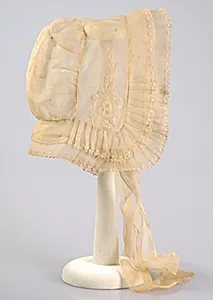
Cap
Unknown Artist
ca. 1850
Medium
Cotton
Classification
Cap
Culture
probably French
Department
Costume Institute
Museum
Metropolitan Museum of Art, New York, NY
Credit
Brooklyn Museum Costume Collection at The Metropolitan Museum of Art, Gift of the Brooklyn Museum, 2009; Gift of The Jason and Peggy Westerfield Collection, 1966
Accession Number
2009.300.5562
Rights
Public Domain
Tags
Art Historical Context
This delicate cotton cap, dating to around 1850 and likely of French origin, offers a charming glimpse into mid-19-century fashion from the Costume Institute at The Metropolitan Museum of Art. Worn as an indoor headdress by women, such caps were essential accessories in the Victorian era, providing both practicality and elegance for daily life at home. Crafted from lightweight cotton, the medium allowed for intricate printed or embroidered designs that were affordable yet refined, reflecting advancements in textile printing techniques popularized during France's Second Empire. The cap's motifs of fruits and flowers—evident in its decorative tags—capture the era's romantic fascination with nature's bounty. These vibrant patterns symbolized abundance, femininity, and the pastoral ideals of the time, often adorning garments to evoke a sense of whimsy and luxury. French fashion houses excelled in such floral and fruity embellishments, blending them seamlessly into everyday wear. As part of the Brooklyn Museum Costume Collection, gifted to The Met, this piece highlights the cultural role of accessories in expressing personal style and social status. Though by an unknown artist, its preservation underscores the artistry of anonymous makers who shaped women's wardrobes, inviting us to appreciate the subtle splendor of historical attire.