
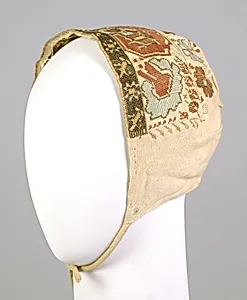
Cap
Unknown Artist
1850–99
Medium
Linen
Classification
Accessory-Headwear-Womenswear
Culture
Montenegrin
Department
Costume Institute
Museum
Metropolitan Museum of Art, New York, NY
Credit
Brooklyn Museum Costume Collection at The Metropolitan Museum of Art, Gift of the Brooklyn Museum, 2009; Museum Expedition 1920 & 1921, Robert B. Woodward Memorial Fund, 1921
Accession Number
2009.300.6243
Rights
Public Domain
Tags
Art Historical Context
Step into the intricate world of 19th-century Montenegrin womenswear with this delicate linen cap, crafted between 1850 and 1899 by an unknown artist. Adorning the head as a cherished accessory, it exemplifies the region's rich tradition of handcrafted costume pieces, where floral motifs—likely meticulously embroidered—bloomed as symbols of beauty, fertility, and cultural pride. Linen, a lightweight and breathable fabric ideal for the rugged Balkan climate, was a staple in everyday and ceremonial attire, showcasing the skill of local women in needlework techniques passed down through generations. In Montenegro, a fiercely independent Balkan principality during this era, such headwear played a vital role in women's ensembles, signaling marital status, regional identity, or festive occasions. These caps were often part of elaborate outfits worn during dances, weddings, or village gatherings, blending functionality with artistry. Collected during the Brooklyn Museum's expeditions in 1920 and 1921, this piece now graces the Metropolitan Museum of Art's Costume Institute, offering a tangible link to Montenegro's resilient folk heritage. Its preservation highlights the enduring appeal of ethnographic textiles, inviting us to appreciate how everyday objects encoded stories of community and craftsmanship.