
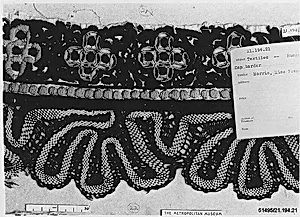
Cap border
Unknown Artist
19th century
Medium
Wool on linen
Dimensions
L. 14 1/2 x W. 5 1/2 inches (36.8 x 14 cm)
Classification
Textiles-Embroidered
Culture
Northern Hungarian
Department
European Sculpture and Decorative Arts
Museum
Metropolitan Museum of Art, New York, NY
Credit
Administration Fund, 1921
Accession Number
21.194.21
Rights
Public Domain
Art Historical Context
This delicate **Cap Border**, crafted in 19th-century Northern Hungary, exemplifies the region's rich tradition of folk embroidery. Measuring just 14½ by 5½ inches (36.8 x 14 cm), this wool-on-linen textile was likely designed as ornamental trim for a traditional cap, adorning everyday or festive headwear worn by women in rural communities. Acquired by The Metropolitan Museum of Art in 1921 through the Administration Fund, it now resides in the European Sculpture and Decorative Arts Department, highlighting the artistry of anonymous makers whose skills preserved cultural identity amid social change. The embroidery technique—stitching vibrant wool threads onto a linen ground—demonstrates masterful needlework typical of Northern Hungarian textiles. Such pieces often featured geometric motifs or floral patterns symbolizing fertility, protection, or regional pride, though the precise design here reflects the era's handmade precision before industrialization. Wool's durability suited the practical needs of peasant life, while linen provided a fine, stable base, making these borders both functional and beautifully decorative. In a time of emerging nationalism, these embroideries served as badges of heritage, passed down through generations. Visitors will appreciate how this modest artifact captures the ingenuity and aesthetic sensibility of Northern Hungarian craftswomen, bridging utility and art in 19th-century Europe.