
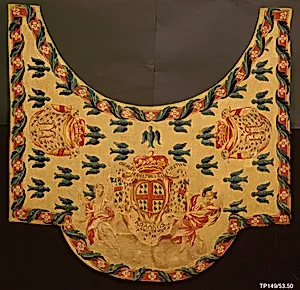
Caparison
1750–85
Medium
Wool, silk (18-20 warps per inch, 7-8 per cm.)
Dimensions
H. 52 1/2 × W. 54 1/2 in. (133.4 × 138.4 cm)
Classification
Textiles-Tapestries
Culture
French, possibly Aubusson
Department
European Sculpture and Decorative Arts
Museum
Metropolitan Museum of Art, New York, NY
Credit
Gift of James Hazen Hyde, 1953
Accession Number
53.50
Rights
Public Domain
Tags
Art Historical Context
This striking caparison, woven in Aubusson, France, between 1750 and 1785, served as an ornate saddlecloth for a horse ceremonial processions or courtly displays. Created from wool and silk with a fine weave of 18–20 warps per inch, the tapestry features delicate birds and a prominent coat of arms, symbols that proclaimed the owner’s noble lineage and status. Such textiles were prized luxury goods, blending utility with visual splendor in an era when equestrian pageantry formed an essential part of aristocratic life. Aubusson workshops were renowned throughout Europe for their high-quality tapestries, which combined vibrant natural motifs with heraldic designs. The presence of birds and armorial imagery reflects the period’s taste for elegant, symbolic decoration that communicated identity and prestige without words. Gifted to the Metropolitan Museum by James Hazen Hyde in 1953, this piece offers today’s visitors a vivid glimpse into eighteenth-century French court culture and the remarkable artistry of its textile traditions.