
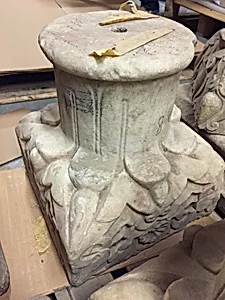
Capital
Unknown Artist
14th century
Medium
White marble
Dimensions
H. 12 1/8 in. (30.8 cm) W. 12 1/2 in. (31.8 cm) D. 13 in. (33 cm) Wt. 85 lbs. (38.6 kg)
Classification
Sculpture
Department
Islamic Art
Museum
Metropolitan Museum of Art, New York, NY
Credit
Gift of The Hearst Foundation, 1956
Accession Number
56.234.28.3
Rights
Public Domain
Art Historical Context
Nestled in the Metropolitan Museum of Art's Islamic department, this 14th-century white marble exemplifies the exquisite stone carving traditions of the medieval Islamic world. Measuring about 12 inches high and wide, with a substantial 85-pound weight, it once crowned a column, supporting arches or beams in a grand architectural setting—likely a mosque,, or madrasa. Crafted by an unknown artist, its compact yet robust form highlights the mastery of marble sculptors who transformed raw stone into functional art. In the 14th century, amid flourishing dynasties like the Mamluks in Egypt or Ilkhanids in Persia, capitals like this were vital to Islamic architecture, blending structural engineering with decorative splendor. White marble, prized for its purity and workability, allowed for intricate detailing that evoked paradise gardens or geometric harmony, core motifs in Islamic design. Though specifics of its ornamentation remain undocumented here, such pieces reflect a cultural emphasis on abstraction and craftsmanship, avoiding figural representation to honor aniconic principles. A generous gift from The Hearst Foundation in 1956, this capital invites visitors to ponder the ingenuity of artisans whose work endures, bridging the gap between utility and beauty in Islamic heritage.