
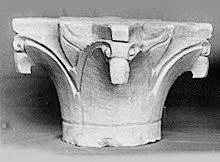
Capital
Unknown Artist
6th–7th century century
Medium
Limestone; carved in relief
Dimensions
H. 16 in. (40.6 cm) W. (top) 20 in. (50.8 cm)
Classification
Sculpture
Department
Islamic Art
Museum
Metropolitan Museum of Art, New York, NY
Credit
Rogers Fund, 1910
Accession Number
10.175.30
Rights
Public Domain
Art Historical Context
This exquisite limestone capital, carved in low relief during the 6th–7th century, hails from the early Islamic world and exemplifies the architectural artistry of the period. Standing 16 inches tall with a 20-inch wide top, it once crowned a column, supporting arches or beams in a mosque, palace, or public structure. Acquired through the Rogers Fund in 0, it now graces the Islamic Art department at the Metropolitan Museum of Art offering a tangible link to a transformative era when Islam emerged amid late antique traditions. The capital's creation coincides with the formative years of Islamic civilization, likely in regions like Syria, Egypt, or Mesopotamia, where stone masons blended Byzantine, Sasanian, and local influences. Relief carving—a technique of incising designs into the stone's surface—allowed for intricate patterns while conserving material, a practical choice for durable limestone quarried across the Middle East. This method highlights the skilled labor of anonymous artisans, whose work adorned sacred and civic spaces without emphasizing human figures, aligning with evolving Islamic aesthetics. Though the specific motifs remain subtle in this preserved fragment, the capital speaks to the cultural flourishing of early Islam, where architecture became a canvas for spiritual expression. Visitors, imagine it perched high above, catching the light of a desert sun— a testament to enduring craftsmanship.