
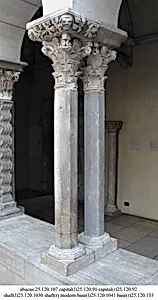
Capital
Unknown Artist
late 12th century
Medium
Stone
Dimensions
Overall: 12 1/4 x 9 5/8 x 9 5/8 in. (31.1 x 24.4 x 24.4 cm)
Classification
Sculpture-Architectural
Culture
French
Department
The Cloisters
Museum
Metropolitan Museum of Art, New York, NY
Credit
The Cloisters Collection, 1925
Accession Number
25.120.91
Rights
Public Domain
Art Historical Context
This exquisite stone capital, crafted by an unknown artist in late 12th-century France, exemplifies the masterful architectural sculpture of the High Middle Ages. Measuring just over 12 inches tall, it would have crowned a column in a grand ecclesiastical structure, such as a cathedral or abbey supporting arches while serving as a canvas for intricate carvings. Housed in The Cloisters at the Metropolitan of Art since 1925, it transports visitors to the world of Gothic precursors, where stone masons transformed raw limestone into symbols of faith and artistry. In medieval France, capitals like this were pivotal in the evolution from Romanesque solidity to the soaring elegance of early Gothic architecture. Carved with precision using chisels and abrasives, these elements often featured stylized foliage, beasts, or biblical figures—details that invited contemplation during worship. Though its exact provenance remains a mystery, this capital reflects the anonymous genius of artisan workshops, where skilled laborers blended technical prowess with spiritual devotion. Today, it stands as a testament to France's cultural heritage, inviting us to marvel at the durability of stone and the ingenuity of medieval builders. A quiet survivor of centuries, it whispers stories of devotion and craftsmanship in The Cloisters' evocative medieval setting.