
Capital
Unknown Artist
late 12th century
Medium
Stone
Dimensions
Overall: 11 3/4 x 19 5/8 x 9 5/8 in. (29.8 x 49.8 x 24.4 cm)
Classification
Sculpture-Architectural
Culture
French
Department
The Cloisters
Museum
Metropolitan Museum of Art, New York, NY
Credit
The Cloisters Collection, 1925
Accession Number
25.120.96
Rights
Public Domain
Art Historical Context
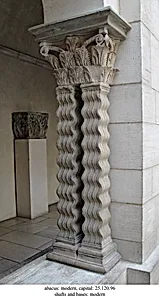
This exquisite stone capital, crafted by an unknown artist in late 12th-century France, once crowned a column in a grand ecclesiastical structure, such as a church or monastery. Measuring about 12 x 20 x 10 inches, it exemplifies architectural sculpture from the Romanesque period's twilight, when elaborate carving transformed functional elements into storytelling canvases. Displayed in The Cloisters at the Metropolitan Museum of Art since 1925, it invites us into the world of medieval builders who adorned sacred spaces with intricate stonework. French masons of this era mastered the art of high-relief carving in durable limestone, often depicting foliage, mythical beasts, or biblical figures to symbolize spiritual themes and ward off evil. Though specific motifs on this capital remain unrecorded here, its compact form and precise dimensions highlight the sculptor's technical prowess—balancing weight-bearing utility with decorative flair amid the shift toward Gothic innovation. As part of The Cloisters Collection, this artifact bridges us to the vibrant monastic life of medieval France, where such capitals supported vaulted ceilings and inspired awe in worshippers. A testament to anonymous genius, it reminds us how everyday architecture pulsed with profound cultural and religious meaning.