
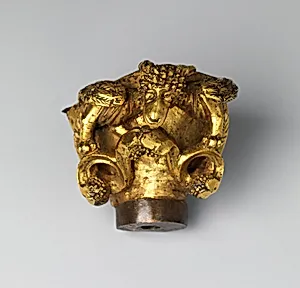
Capital from a Reliquary Shrine
Unknown Artist
ca. 1175–1200
Medium
copper alloy, gilt
Dimensions
Overall: 1 3/16 x 1 1/2 x 1 1/8 in. (3 x 3.8 x 2.8 cm)
Classification
Metalwork-Copper alloy
Culture
German
Department
Medieval Art
Museum
Metropolitan Museum of Art, New York, NY
Credit
Gift of J. Pierpont Morgan, 1917
Accession Number
17.190.441
Rights
Public Domain
Art Historical Context
This exquisite *Capital from a Reliquary Shrine*, crafted in Germany around 1175–1200, offers a glimpse into the devotional artistry of the High Middle Ages. As a tiny architectural element—likely the crowning top of a miniature column—it once adorned a reliquary shrine, a sacred container for holy relics such as saints' bones or fragments. These shrines were venerated in churches, embodying spiritual power and drawing pilgrims in an era when faith permeated daily life. Its diminutive size (just over an inch tall) highlights the meticulous skill required for such sacred objects, where every detail amplified divine glory. Fashioned from copper alloy and lavishly gilt—coated with a thin layer of gold—the capital gleams with opulence, a technique that elevated base metals to jewel-like splendor. Gilding not only prevented corrosion but symbolized heavenly radiance, making the reliquary a focal point for worship. German metalworkers of this Romanesque period excelled in such lost-wax casting methods, producing intricate forms that balanced functionality with symbolism. Today, this rare survivor graces the Metropolitan Museum of Art, thanks to the 1917 gift of J. Pierpont Morgan. It reminds us of medieval craftsmanship's fusion of piety and precision, inviting us to marvel at objects that once bridged earth and eternity.