
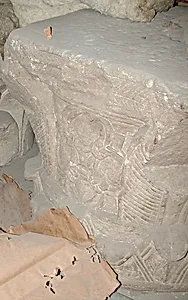
Capital with Palm Leaves
Unknown Artist
5th century
Medium
Sandstone; carved
Dimensions
H. 18 1/2 in. (47 cm) W. (Base) 21 in. (53.3 cm) D. (Base) 19 1/2 in. (49.5 cm)
Classification
Sculpture
Department
Islamic Art
Museum
Metropolitan Museum of Art, New York, NY
Credit
Rogers Fund, 1910
Accession Number
10.175.4
Rights
Public Domain
Art Historical Context
Behold the *Capital with Palm Leaves*, masterful 5th-century carved sandstone sculpture from the Metropolitan Museum of Art's Islamic Art collection. Standing about 18½ inches tall with a broad base measuring over 20 inches across, this architectural element once crowned a column, its undulating palm fronds evoking the lush date palms central to life in the early Islamic world. Acquired through the Rogers Fund in 0, it exemplifies the exquisite stonework of the period. Crafted by an unknown artist, this capital bridges late antique traditions and the dawn of Islamic art, likely originating from regions like Syria or Iraq where palm motifs symbolized abundance, fertility, and paradisiacal gardens promised in the Quran. Such vegetal designs were favored in early Islamic architecture for their aniconic beauty, avoiding human or animal figures while celebrating nature's splendor—a hallmark of the era's aesthetic restraint and ingenuity. The intricate carving technique reveals masterful control of sandstone, with deep undercuts and flowing volutes that catch the light, mimicking the sway of real leaves in the wind. Though modest in scale, it whispers of grand mosques and palaces, inviting visitors to ponder the cultural crossroads of the 5th century, where Byzantine, Sassanian, and emerging Islamic influences intertwined.