
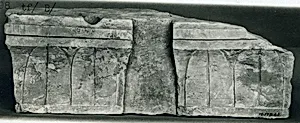
Capital with Palm Leaves
Unknown Artist
6th–7th century
Medium
Limestone; carved in relief
Classification
Sculpture
Department
Islamic Art
Museum
Metropolitan Museum of Art, New York, NY
Credit
Rogers Fund, 1910
Accession Number
10.175.62
Rights
Public Domain
Art Historical Context
This finely carved limestone capital, dating to the 6th–7th century, features elegant palm leaves in low relief, evoking the lush vegetation of ancient gardens. Acquired through the Rogers Fund in 0 and now in the Metropolitan Museum of Art's Department of Islamic Art, it an architectural element—the top of a column—likely from a mosque, palace, or public building in the early Islamic world. Created during a transformative era bridging late antiquity and the rise of Islam (around 622 CE), the artwork reflects the fusion of Byzantine, Sassanian, and traditions. Palm motifs, common in early Islamic decoration, symbolize paradise, fertility, and eternal life, aligning with Qur'anic imagery of heavenly gardens while adhering to aniconic principles that favor vegetal patterns over human figures. The relief technique on durable limestone allowed artisans to achieve intricate, shallow carving that catches light beautifully, adding depth and movement without the weight of fully sculpted forms. This piece offers a window into the sophisticated stoneworking skills of the time, highlighting Islam's early contributions to architectural ornamentation.