
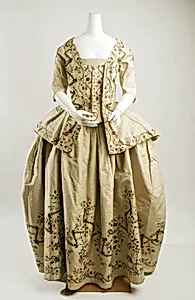
Caraco
Unknown Artist
ca. 1780
Medium
silk, metallic thread
Classification
Caraco
Culture
French
Department
Costume Institute
Museum
Metropolitan Museum of Art, New York, NY
Credit
Catharine Breyer Van Bomel Foundation Fund, 1978
Accession Number
1978.85.1
Rights
Public Domain
Art Historical Context
Step into the opulent world of 18th-century French fashion with this exquisite *Caraco*, a short, fitted jacket dating to around 1780. Crafted from sumptuous silk interwoven with shimmering metallic threads, it exemplifies the lavish materials favored by the French aristocracy on the eve of the Revolution. Worn over a petticoat or skirt, the caraco blended formality with informality, making it a versatile staple in women's wardrobes for both courtly gatherings and private salons. This garment hails from the height of the Rococo style's final flourish, where intricate textile techniques like weaving and embroidery highlighted wealth and craftsmanship. The metallic threads catch the light, creating a dynamic play of texture and sparkle that would have dazzled in candlelit rooms. As a product of French cultural dominance in fashion, it reflects the era's emphasis on elegance and excess, before Neoclassicism ushered in simpler lines. Today, housed in the Metropolitan Museum of Art's Costume Institute—thanks to the Catharine Breyer Van Bomel Foundation Fund—this caraco offers a tangible link to the social rituals of pre-Revolutionary France, reminding us how clothing encoded status and style in a transforming world.