
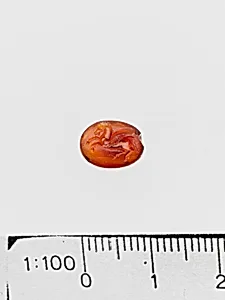
Carnelian ring stone
Unknown Artist
ca. 1st century BCE–3rd century CE
Medium
Sard
Dimensions
Length: 1/2 in. (1.2 cm)
Classification
Gems
Culture & Period
Roman · Late Republican or Imperial
Department
Greek and Roman Art
Museum
Metropolitan Museum of Art, New York, NY
Credit
Gift of John Taylor Johnston, 1881
Accession Number
81.6.116
Rights
Public Domain
Tags
Art Historical Context
This exquisite carnelian ring stone carved from sard—a rich, reddish-brown variety of chalcedony— to the Late Republican or Imperial Roman period (ca. 1st century BCE–3rd century CE). Measuring just 1/2 inch (1.2 cm) in length, it the ancient art of gem engraving, likely an intaglio designed for a finger ring. The central motif is Pegasus, the mythical winged horse born from Medusa's blood, symbolizing poetic inspiration and triumph over chaos in Greek and Roman mythology. Roman gems like this were prized possessions, serving both as personal jewelry and practical seals for documents or wax. Artisans skillfully exploited sard’s durability and warm translucency, carving fine details into the surface so the image appeared raised when impressed into soft material. Such miniature masterpieces reflect the era's mastery of micro-scale sculpture, blending Hellenistic influences with Roman realism. Now housed in the Metropolitan Museum of Art's Greek and Roman Art Department, this gem was a gift from John Taylor Johnston in 1881. It invites us to marvel at the ingenuity of anonymous Roman craftsmen, who packed grand myths into jewels worn daily by the elite.