
Carpet
1814–30
Dimensions
122 × 97 in. (309.9 × 246.4 cm)
Classification
Textiles-Rugs
Culture
French, Aubusson
Department
European Sculpture and Decorative Arts
Museum
Metropolitan Museum of Art, New York, NY
Credit
Gift of Captain and Mrs. William G. Fitch, in memory of their son, Clyde Fitch, 1910
Accession Number
10.152.14
Rights
Public Domain
Tags
Art Historical Context
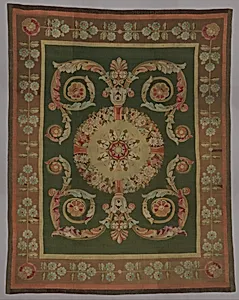
This magnificent Aubusson carpet, woven in France between 1814 and 1830, exemplifies the refined artistry of the Aubus region, renowned for its high-quality tapestry-woven rugs. Measuring an impressive 122 × inches, this large-scale piece was designed for grand interiors, likely a salon or drawing room, during the Bourbon Restoration and early July Monarchy. Its floral motifs—ev from the decorative tags—capture the neoclassical elegance of the era, blending delicate blooms with symmetrical patterns inspired by antiquity and nature, a hallmark of post-Napoleonic decorative tastes. Crafted using the basse lisse (low-warp) loom technique, Aubusson carpets like this one are flat-woven without pile, allowing for intricate, painterly designs in wool threads that rival fine tapestries. This method, perfected in Aubusson since the 17th century, made them more affordable than knotted Oriental rugs while maintaining exceptional durability and subtlety of color. Produced by skilled ateliers under royal patronage, these carpets symbolized French luxury, adorning homes across Europe and America. A generous gift to the Metropolitan Museum of Art in 1910 from Captain and Mrs. William G. Fitch, in memory of their son Clyde Fitch, this carpet invites visitors to appreciate how everyday elegance bridged art and domestic life in 19th-century France.