
Carpet
Unknown Artist
probably late 18th–early 19th century
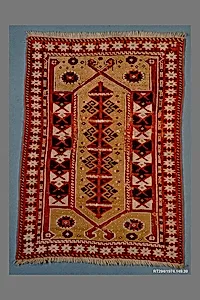
Medium
Wool (warp, weft, and pile); symmetrically knotted pile
Dimensions
H. 40 in. (101.6 cm) W. 28 1/4 in. (71.8 cm)
Classification
Textiles-Rugs
Department
Islamic Art
Museum
Metropolitan Museum of Art, New York, NY
Credit
Bequest of Joseph V. McMullan, 1973
Accession Number
1974.149.39
Rights
Public Domain
Art Historical Context
This exquisite wool carpet, crafted by an unknown artist in the late18th to early 19th century exemplifies the masterful textile traditions of Islamic art. Measuring 40 28¼ inches, it features a warp, weft, and pile all made from wool, woven with the symmetrically knotted pile technique—a of rugs from regions like Anatolia or the Caucasus. This knotting method, where each knot is mirrored across the weave, allows for durable, finely detailed patterns that have endured for centuries. In Islamic culture, such carpets held profound significance beyond mere flooring. They adorned homes, mosques, and tents, often symbolizing prosperity, protection, and spiritual life through their geometric motifs and vibrant dyes derived from natural sources. The symmetrical knot's precision reflects the weavers' skill, passed down through generations in nomadic or village workshops, making each piece a testament to communal artistry. Acquired through the generous bequest of Joseph V. McMullan in 1973, this carpet now graces the Metropolitan Museum of Art's Islamic Art collection. Visitors can appreciate how it captures a pivotal era of transition in Ottoman and regional textile production, blending utility with breathtaking beauty.