
Carpet Fragment
Unknown Artist
16th century
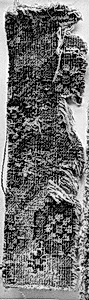
Medium
Silk (warp and pile), cotton (weft); asymmetrically knotted pile
Dimensions
H. 8 3/4 in. (22.2 cm) W. 2 1/2 in. (6.4 cm)
Classification
Textiles-Rugs
Department
Islamic Art
Museum
Metropolitan Museum of Art, New York, NY
Credit
Rogers Fund, 1923
Accession Number
23.211.38
Rights
Public Domain
Art Historical Context
This exquisite carpet fragment from the 16 century offers a tantalizing glimpse into the opulent world of Islamic textile artistry. Housed in the Metropolitan Museum of Art's Department Islamic Art, this small piece—measuring just 8 3/4 by 2 1/2 inches—was acquired through the Rogers Fund in 3. Likely originating from a larger prayer rug or floor covering in the Persian tradition, it reflects the height of Safavid-era craftsmanship, when carpets were prized symbols of wealth, piety, and cultural refinement across the Islamic world. Crafted with silk for the warp and lustrous pile, and cotton for the sturdy weft, the fragment showcases the asymmetrically knotted pile technique—a hallmark of Persian weaving. This method, where knots are offset for denser patterns, allowed weavers to create intricate designs with remarkable precision and sheen. The silk's natural luster would have caught the light beautifully in a grand palace or mosque, evoking luxury reserved for the elite. Though incomplete, this fragment preserves the ingenuity of anonymous master weavers, whose innovations influenced global decorative arts. It invites us to marvel at how everyday materials transformed into enduring treasures, bridging centuries and cultures.