
Carpet Fragment
Unknown Artist
14th–15th century
Medium
Wool (warp, weft, and pile); symmetrically knotted pile
Dimensions
Textile: H. 22 in. (55.9 cm) W. 11 1/2 in. (29.2cm) Mount: H. 27 1/2 in. (69.9 cm) W. 12 1/2 in. (31.8 cm)
Classification
Textiles-Rugs
Department
Islamic Art
Museum
Metropolitan Museum of Art, New York, NY
Credit
Gift of Nelly, Violet and Elie Abemayor, in memory of Michel Abemayor, 1978
Accession Number
1978.546.54
Rights
Public Domain
Art Historical Context
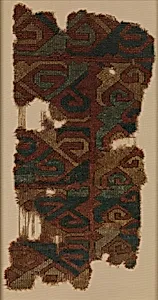
This exquisite carpet fragment, dating to the 14th–15th century, offers a glimpse into the masterful textile traditions of the Islamic world. Housed in the Metropolitan Museum of Art's of Islamic Art, this wool piece—measuring about 22 by 11½ inches—was generously gifted by the Abemayor family in1978. Surviving fragments like this are rare treasures, as many opulent carpets from this era were used until they frayed, reflecting their everyday role in homes, mosques, and palaces across regions like Anatolia, Persia, and beyond. Crafted with a symmetrically knotted pile technique—a hallmark of Islamic rug-making—the fragment showcases the weavers' precision. Wool forms the warp, weft, and plush pile, knotted symmetrically for durability and a dense, lustrous surface. This method, often associated with Turkish or Anatolian workshops, allowed for vibrant patterns and motifs that symbolized prosperity, protection, and spiritual themes, dyed with natural plant and insect sources for enduring color. Though incomplete, this fragment highlights the cultural pinnacle of Islamic textiles: carpets as art forms that blended utility with beauty, traded along Silk Road routes, and influencing global design. Visitors, imagine it as part of a grand prayer rug or floor covering— a testament to anonymous artisans whose skill wove history into every knot.