
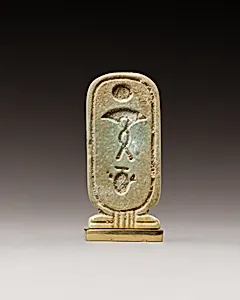
Cartouche-shaped plaque with the names of Apries
Unknown Artist
589–570 B.C.
Medium
Faience
Dimensions
H. 3.8 × W. 2.8 × Th. 0.7 cm (1 1/2 × 1 1/8 × 1/4 in.)
Classification
Plaque, cartouche, Apries
Period
Late Period, Saite
Department
Egyptian Art
Museum
Metropolitan Museum of Art, New York, NY
Credit
Gift of Egypt Exploration Fund, 1902
Accession Number
02.4.105b
Rights
Public Domain
Art Historical Context
This delicate cartouche-shaped plaque, around 589–570 B.C. during Egypt's Late Period (Dynasty 26, Saite), bears the royal names of Pharaoh Apries, who ruled from the Nile Delta city of Sais. The Saite era marked a cultural renaissance, reviving Old Kingdom artistic ideals amid Persian threats, with pharaohs like Apries commissioning works that emphasized divine kingship. Shaped like the protective oval enclosure (cartouche) used for royal names in hieroglyphs, this small artifact—measuring just 3.8 cm high—likely served as a seal, amulet, or architectural inlay, symbolizing the pharaoh's eternal authority and protection. Made of faience, a signature Egyptian medium of fired quartz paste coated in vibrant turquoise or blue glaze, the plaque exemplifies advanced ancient technology. Faience allowed for affordable yet luxurious production of small-scale objects, mimicking precious stones like lapis lazuli. Its glossy surface and precise molding highlight Saite artisans' skill in creating durable, colorful items for both elite and temple use. A gift to the Metropolitan Museum of Art from the Egypt Exploration Fund in 1902, this plaque offers a tangible glimpse into Apries' prosperous yet turbulent reign, which ended in rebellion. It reminds us how everyday objects preserved pharaonic legacy for millennia.