
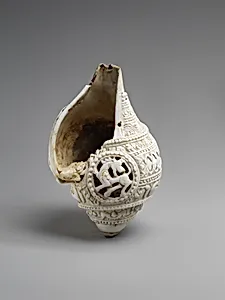
Carved Conch
Unknown Artist
11th century or earlier
Medium
Shell
Dimensions
H. 6 in. (15.2 cm); W. 4 1/8 in. (10.5 cm); D. 3 5/8 in. (9.2 cm)
Classification
Sculpture
Culture & Period
India · Pala period
Department
Asian Art
Museum
Metropolitan Museum of Art, New York, NY
Credit
Gift of Evelyn Kossak, The Kronos Collections, 1986
Accession Number
1986.501.5
Rights
Public Domain
Tags
Art Historical Context
Nestled in the Metropolitan Museum of Art's Asian Art collection, this *Carved Conch* is a delicate sculpture from India's Pala period, dating to the 11th century or. Fashioned from a single conch shell—standing 6 inches high, 4⅛ inches wide, and3⅝ inches deep—the artwork showcases the era's masterful craftsmanship. The dynasty (8th–12th centuries), ruling in eastern India, flourished under Buddhist patronage, producing refined sculptures in stone, metal, and now this rare shell example, gifted by Evelyn Kossak of The Kronos Collections in 1986. Conch shells held profound cultural and spiritual significance in ancient India, revered in both Hindu and Buddhist traditions as symbols of the divine sound "Om," prosperity, and ritual purity. Often blown as trumpets in ceremonies, they embodied cosmic vibrations and were associated with deities like Vishnu. Carving such a fragile, natural medium demanded extraordinary precision, highlighting the anonymous artist's skill in transforming a humble shell into a sacred object. This piece offers a glimpse into Pala artistry's elegance and devotion, where everyday marine treasures became vessels of the sacred. Visitors will appreciate its tactile allure and the quiet power it evokes from a vibrant spiritual heritage.