
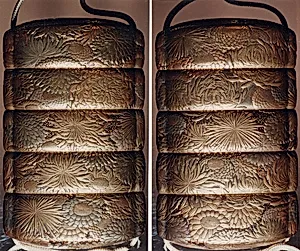
Case (Inrō) with Design of Chrysanthemum Blossoms
Unknown Artist
19th century
Medium
Lacquer, kinji, gold, silver and brown hiramakie, kirigane and nashiji; Interior: gyobu nashiji and fundame
Dimensions
3 3/8 x 2 1/16 x 15/16 in. (8.6 x 5.3 x 2.4 cm)
Classification
Inrō
Culture & Period
Japan · Edo (1615–1868) or Meiji period (1868–1912)
Department
Asian Art
Museum
Metropolitan Museum of Art, New York, NY
Credit
Bequest of Benjamin Altman, 1913
Accession Number
14.40.886a, b
Rights
Public Domain
Tags
Art Historical Context
This delicate *Inrō*, or tiered lacquer case, hails from 19th-century Japan the Edo (16151868) or early Meiji (1868–1912) period. Worn suspended from a silk cord at the waist (inro netsuke style), it served as a practical yet elegant container for medicines, seals, or tobacco, reflecting the refined tastes of samurai and merchants in urban Edo society. Adorned with blooming chrysanthemum flowers—a symbol of autumn, longevity, and imperial nobility—the design captures nature's fleeting beauty in miniature form, measuring just 3 3/8 x 2 1/16 x 15/16 inches. Crafted with masterful lacquer techniques, the exterior features kinji (gold ground) enhanced by hiramakie (flat sprinkled gold and silver powder), kirigane (cut metal flakes), and nashiji (pearlescent gold flecks), creating a shimmering, textured surface where petals glow against a rich brown backdrop. The interior gleams with gyobu nashiji (fine gold speckling) and fundame (lacquer foundation), showcasing the painstaking maki-e process perfected by Japanese artisans over centuries. A highlight of the Metropolitan Museum of Art's Asian Art collection, bequeathed by Benjamin Altman in 1913, this anonymous masterpiece embodies Japan's fusion of utility and artistry, inviting visitors to appreciate the chrysanthemum's enduring cultural resonance.