
Case (Inrō) with Design of Dragon Emerging from Waves
Unknown Artist
18th–19th century
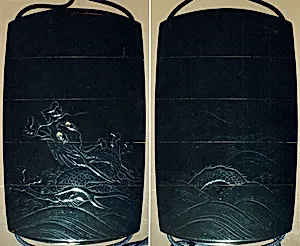
Medium
Lacquer, roiro, yamimakie, black hiramakie, takamakie, inlaid raden eyes; Interior: nashiji and fundame
Dimensions
3 1/2 x 2 1/8 x 13/16 in. (8.9 x 5.4 x 2 cm)
Classification
Inrō
Culture & Period
Japan · Edo period (1615–1868)
Department
Asian Art
Museum
Metropolitan Museum of Art, New York, NY
Credit
H. O. Havemeyer Collection, Bequest of Mrs. H. O. Havemeyer, 1929
Accession Number
29.100.773
Rights
Public Domain
Tags
Art Historical Context
This exquisite *Inrō*, or lacquer case, from Japan's Edo period (1615–1868), served as a stylish portable container for men to carry medicines, seals, or tobacco. Suspended from the belt via a cord and secured with a netsuke (not included here), it exemplified the era's blend of functionality and refined artistry. Dating to the 18th–19th century and created by an unknown master craftsman, this pocket-sized treasure (just 3 1/2 x 2 1/8 x 13/16 in.) reflects the height of Japanese lacquerware, prized for its durability and opulent decoration. The dynamic design depicts a powerful dragon emerging from turbulent waves—a classic motif symbolizing imperial strength, divine protection, and mastery over nature in Japanese lore. Crafted with sophisticated techniques, the exterior features glossy *roiro* black lacquer, *yamimakie* (gold powder on dark grounds), *black hiramakie* (flat sprinkled designs), and raised *takamakie*, with shimmering *raden* mother-of-pearl inlays for the dragon's eyes. The interior gleams with *nashiji* (pear-skin gold flecks) and *fundame* (solid gold lacquer), showcasing the meticulous multi-layered process that could take months. Part of the H. O. Havemeyer Collection at The Metropolitan Museum of Art, this inrō highlights Edo Japan's urban sophistication, where samurai and merchants alike commissioned such personalized luxuries, bridging everyday utility with artistic brilliance.