
Case (Inrō) with Design of Ebisu and Daikoku Dancing beneath New Year's Decorations
19th century
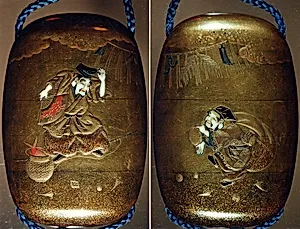
Medium
Gold lacquer with gold and colored hiramkie sprinkled and polished lacquer and ivory inlay; Netsuke: polished wood button; Ojime: red lacquer bead; Interior: nashiji and fundame
Dimensions
3 3/8 x 2 5/16 x 13/16 in. (8.6 x 5.9 x 2 cm)
Classification
Inrō
Culture & Period
Japan · Edo period (1615–1868)
Department
Asian Art
Museum
Metropolitan Museum of Art, New York, NY
Credit
H. O. Havemeyer Collection, Bequest of Mrs. H. O. Havemeyer, 1929
Accession Number
29.100.853
Tags
Art Historical Context
This exquisite *inrō*, a lacquered case worn suspended from the sash by samurai and merchants during Japan's Edo period (16151868), captures the joyful spirit of New Year's celebrations. Crafted in the 19th century the artist Nikkōsai in the style of Hanab Itchō—a renowned Edo-period painter known for his lively genre scenes—the piece depicts the lucky gods Ebisu and Daoku dancing beneath festive *kadomatsu* pine decorations. Ebisu, patron of fishermen often shown with a sea bream (tai), and Daikoku, god of wealth wielding his magical mallet, symbolize prosperity and abundance, invoking good f...
About the Artist
Nikkōsai|Hanabusa Itchō ( |Japanese) · |1652 – |1724
|Japanese, 1652–1724