
Case (Inrō) with Fox Wedding Procession
19th century
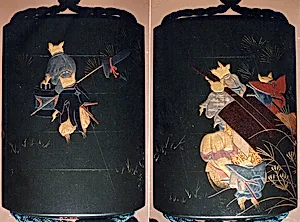
Medium
Colored lacquer and gold maki-e on wood Netsuke: ivory in form of fox reclining on large leaf; Ojima: gold bead; connecting cord, dark green silk Inro with netsuke and ojime
Dimensions
3 1/16 x 2 1/8 x 13/16 in. (7.7 x 5.4 x 2 cm)
Classification
Inrō
Culture & Period
Japan · Meiji period (1868–1912)
Department
Asian Art
Museum
Metropolitan Museum of Art, New York, NY
Credit
Rogers Fund, 1957
Accession Number
57.53
Rights
Public Domain
Tags
Art Historical Context
This exquisite *Inrō* (lacquer case), crafted by Shibata Zeshin the Meiji period (18681912), showcases the pinnacle of Japanese lacquer artistry Zeshin, a master in the medium, transformed everyday objects into wearable art. Worn suspended from a kimono sash, the inrō held small essentials like medicines or seals, secured by an ivory netsuke—a reclining fox on a large—and a gold ojime, linked by dark green silk cord Measuring just 3 1/16 x 2 1/8 x 13/16 inches, its compact form belies its intricate detail. The case's surface bursts with a whimsical "Fox Wedding Procession" in colored lacquer and gold *maki-e*, a technique where powdered gold is sprinkled onto wet lacquer and polished to luminous effect. Foxes, sacred messengers of the Shinto deity Inari, often appear in folklore as shape-shifters leading nocturnal parades with lanterns. This playful motif blends humor and mysticism, reflecting Edo-period yōkai (supernatural) tales persisting into Meiji Japan amid rapid modernization. Zeshin's mastery elevated lacquerware from functional to collector's treasure, influencing global appreciation of Japanese crafts. Acquired via the Rogers Fund in 1957, this Metropolitan Museum of Art gem invites you to ponder the foxes' midnight revelry— a tiny portal to Japan's enchanting spirit world.
About the Artist
Shibata Zeshin · 1807–1891
Japanese, 1807–1891