
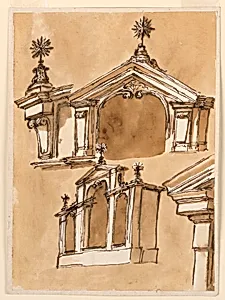
Case of organ pipes
1746–1809
Classification
architecture
Department
Smithsonian Collection
Museum
Smithsonian American Art Museum
Credit
Museum purchase through gift of various donors and from Eleanor G. Hewitt Fund
Accession Number
1938-88-1785
Rights
Public Domain
About this artwork
Research in Progress
Art Historical Context
Giuseppe Barberi, an architect active in the late 18th century (6–1809), this *Case of Organ Pipes*, a striking example of architectural design from his era. Housed in the Smithsonian American Art Museum through a museum purchase supported by various donors and the Eleanor G. Hewitt Fund the piece reflects the ornate craftsmanship typical of Italian ecclesiastical art. Barberi, known for his work in Rome during a time of transition from Baroque exuberance to emerging Neoclassicism, likely designed this as a decorative enclosure for church organ pipes, blending functionality with aesthetic grandeur. Classified within the Smithsonian's architecture collection, the case highlights the architectural role of musical instruments in historic religious spaces. Organ cases were not mere housings but sculptural focal points in cathedrals and basilicas, often adorned with intricate carvings, gilding, or symbolic motifs to elevate worship through visual splendor. Though the exact medium remains under study—research is ongoing—this artifact underscores Barberi's skill in creating harmonious structures that integrated art, sound, and sacred architecture. Visitors to the Smithsonian will appreciate how such pieces transport us to 18th-century Italy, where architecture served both the divine and the delightfully human senses. Keep an eye out for updates as curatorial research progresses!