
Casket
Unknown Artist
late 12th–early 13th century
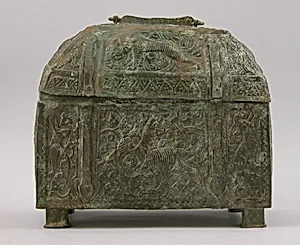
Medium
Brass; hammered in repoussé and chased
Dimensions
H. 8 in. (20.3 cm) W. 9 in. (22.9 cm) Diam. 6 1/8 in. (15.6 cm) Wt. 26 oz. (737.17 g)
Classification
Metal
Department
Islamic Art
Museum
Metropolitan Museum of Art, New York, NY
Credit
Gift of George Hecksher, 2001
Accession Number
2001.762
Rights
Public Domain
Tags
Art Historical Context
This enchanting brass casket, crafted by an unknown artist in the late 12th to early 13th century exemplifies the masterful metalworking traditions of the Islamic world. Measuring just 8 inches high and weighing a mere 26 ounces, its compact form—ideal for holding precious spices, jewelry, or cosmetics—made it a coveted portable luxury. The surface is adorned with dynamic repoussé work, where designs of fierce lions and mythical creatures are into relief from the reverse side, then refined with intricate chasing from the front. These techniques highlight the artisan's skill in transforming humble brass into a shimmering narrative canvas. In the medieval Islamic courts of regions like Syria or Iraq, such caskets were prized for their symbolic motifs. Lions, emblems of strength and royalty, alongside fantastical beasts, evoked power and protection, blending realism with the supernatural in a style characteristic of Islamic decorative arts. This piece, now in the Metropolitan Museum of Art's Islamic Art collection (gift of George Hecksher, 2001), offers a window into the era's vibrant trade and craftsmanship, where metalwork rivaled the finest enamels and gilding. A true treasure for any visitor!