
Casket (cofanetto or scrigno)
Unknown Artist
1575–1600
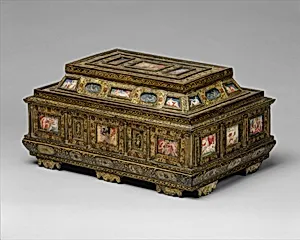
Medium
Beechwood, ebony, painted and decorated with incrustation of mother-of-pearl, ivory with gilding; miniatures: gouache on parchment; lined with later fabric
Dimensions
7 7/8 × 15 5/8 in. (20 × 39.7 cm)
Classification
Woodwork-Furniture
Culture
Italian, Venice
Department
European Sculpture and Decorative Arts
Museum
Metropolitan Museum of Art, New York, NY
Credit
Gift of J. Pierpont Morgan, 1917
Accession Number
17.190.848
Rights
Public Domain
Tags
Art Historical Context
This exquisite Venetian casket, known as a *cofanetto* or *scrigno*, dates to 15751600 and exemplifies the opulent decorative arts of late Renaissance Italy. Crafted in Venice—a hub of luxury trade and craftsmanship—these small wooden boxes (measuring just 7⅞ × 15⅝ inches) were prized possessions, often used to store jewelry, love, or precious keepsakes. Donated to the Metropolitan Museum of Art 1917 by J. Pierpont Morgan, it the era's blend of functionality and splendor, showcasing Venice's mastery in exporting finely wrought objects to elite European patrons. The casket's construction highlights virtuoso techniques: a base of beechwood and ebony is adorned with intricate *intarsia*-style inlays of shimmering mother-of-pearl and gilded ivory, creating a jewel-like surface. Delicate gouache miniatures on parchment depict scenes featuring women and female nudes, likely drawn from mythology or allegorical themes popular in Venetian art. The later fabric lining adds a tactile luxury, underscoring its intimate, personal use. As a rare survivor of Renaissance woodwork, this piece illuminates Venice's cultural prestige, where exotic materials symbolized wealth and erotic motifs celebrated sensuality amid the city's vibrant artistic scene. Visitors will appreciate its tactile allure and the meticulous skill that transformed humble wood into a portable treasure.