
Casque
Unknown Artist
17th – 18th century
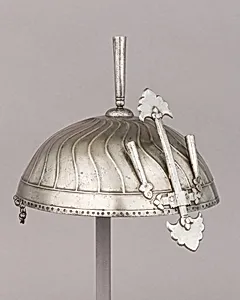
Medium
Steel
Dimensions
H. including nape defense 10 in. (25.4 cm); H. excluding nape defense 6 in. (15.2 cm); Diam. 7 3/8 in. (18.7 cm); Wt. 1 lb. 10 oz. (737.1 g)
Classification
Helmets
Culture
Indian, North Indian
Department
Arms and Armor
Museum
Metropolitan Museum of Art, New York, NY
Credit
Bashford Dean Memorial Collection, Funds from various donors, 1929
Accession Number
29.158.50
Rights
Public Domain
Art Historical Context
This finely crafted steel casque, originating from North India in the 17th–18th, exemplifies the masterful metalworking traditions of the region's warrior cultures. Measuring about 10 inches high (including its nape defense) with a7⅜-inch diameter and weighing just 1 lb. 10 oz., it was designed for agility on the battlefield, offering crucial head protection without sacrificing mobility. As part of the Metropolitan Museum of Art's Arms Armor Department, it hails from the Bashford Dean Memorial Collection, acquired through generous donors in 1929. In the turbulent era of Mughal expansion and Rajput resistance, such helmets were essential for cavalry and infantry fighters, reflecting North India's rich martial heritage. Forged from high-quality steel, the casque's smooth, robust form highlights advanced techniques in hammering, shaping, and tempering—skills honed over generations by anonymous armorers. Its close-fitting "casque" style, derived from Persian influences, prioritized both defense and wearability. Today, this artifact invites us to ponder the artistry behind warfare, where functionality met exceptional craftsmanship. A testament to India's enduring legacy in arms production, it reminds visitors of the human ingenuity that defined an age of valor.