
Cassetta Frame
Unknown Artist
mid-16th century
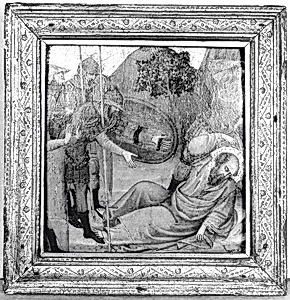
Medium
Pine
Dimensions
Overall: 15 3/16 × 15 5/8 in. (38.5 × 39.7 cm) Sight: 11 7/16 × 11 13/16 in. (29 × 30 cm) Rabbet: 12 3/8 × 12 13/16 in. (31.5 × 32.5 cm)
Classification
Frames
Culture
Italian, Veneto
Department
Robert Lehman Collection
Museum
Metropolitan Museum of Art, New York, NY
Credit
Robert Lehman Collection, 1975
Accession Number
1975.1.1793
Rights
Public Domain
Art Historical Context
This elegant *Cassetta Frame* from mid-16th-century Veneto, Italy, exemplifies the Renaissance artistry of Venetian frame-making. Crafted from pine—a lightweight, easily carved wood favored for its workability—the frame features a classic cassetta design: a deep box-like profile with a outer molding, recessed sight edge, and inner rabbet for securing a painting. Its compact dimensions (overall 15 3/16 × 15 5/8 in.) made it ideal for intimate panel paintings, common in private devotional or domestic settings during Venice's Golden Age. Cassetta frames like this one were more than mere supports; they were integral to the artwork's presentation, enhancing the illusion of depth and drawing the eye inward. Veneto workshops, thriving amid the city's trade and artistic patronage, produced these simple yet sophisticated frames, often gilded or painted to complement oil paintings by masters like Titian. Though the artist remains unknown, the frame's clean lines reflect the period's shift toward balanced, humanist proportions. Now part of the Robert Lehman Collection at The Metropolitan Museum of Art (acquired 1975), this survivor offers a glimpse into Renaissance framing techniques and the symbiotic relationship between frame and canvas in Italian art. Visitors can appreciate how such objects elevated everyday art into treasures.