
Cassone
Unknown Artist
ca. 1425–50
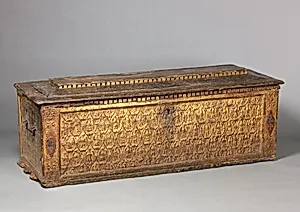
Medium
Pinewood and poplar, gesso, partly gilded, form molded, and painted.
Dimensions
H. 51.4 cm, W. 149.2 cm.
Classification
Woodwork-Furniture
Culture
Italian (Tuscany, Florence or Siena)
Department
Robert Lehman Collection
Museum
Metropolitan Museum of Art, New York, NY
Credit
Robert Lehman Collection, 1975
Accession Number
1975.1.1938
Rights
Public Domain
Art Historical Context
Step into the world of Renaissance Italy with this exquisite *cassone*, a luxurious marriage chest crafted around 1425–50 in Tuscany, likely Florence or Siena. Cassoni like this one were essential wedding gifts, designed to hold a bride's trousseau—clothing, linens, and dowry items—while serving as symbols of status and family alliances. Adorned with painted panels and intricate molding, they transformed everyday furniture into storytelling art, often depicting scenes from classical myths, history, or moral tales to celebrate marital virtues. Constructed from pinewood and poplar for durability, this piece showcases masterful techniques: a gesso base prepared the surface for vibrant painting and partial gilding, which caught the light in opulent Renaissance homes. The molded forms added depth and elegance, reflecting the refined craftsmanship of Florentine or Sienese workshops during the early Quattrocento, a time when painting on panel rivaled frescoes in innovation. Housed in the Metropolitan Museum of Art's Robert Lehman Collection since 1975, this anonymous masterpiece offers a glimpse into domestic life among Italy's elite. Though its specific imagery remains a mystery, it embodies the era's blend of utility, beauty, and symbolism, inviting us to imagine the joyous processions and private chambers it once graced.