
Cat amulet
Unknown Artist
664–380 B.C.
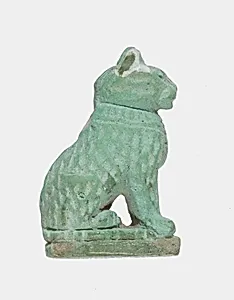
Medium
Faience
Dimensions
h. 2.3 cm (7/8 in)
Classification
Amulet, Cat
Period
Late Period
Department
Egyptian Art
Museum
Metropolitan Museum of Art, New York, NY
Credit
Bequest of Mary Anna Palmer Draper, 1915
Accession Number
15.43.26
Rights
Public Domain
Tags
Art Historical Context
This delightful cat amulet, measuring a petite 2.3 cm in height, hails from Egypt's Late Period (Dynasties –29, 664–380 B.C.). Crafted by an unknown artist from vibrant faience—a glazed ceramic made from quartz, lime, and clay frit—this small artifact captures the sleek form of a seated cat, a motif beloved in ancient Egyptian culture. Now part of the Metropolitan Museum of's Egyptian Art collection, it entered through the generous bequest of Mary Anna Draper in 1915Faience was a favored medium for amulets like this, prized for its brilliant blue-green glaze that mimicked costly lapis lazuli or turquoise, yet remained affordable for everyday use. The technique involved molding the friable material, firing it at low temperatures, and applying a glossy alkaline glaze, resulting in a luminous, jewel-like finish ideal for protective talismans. Cats held profound cultural significance in ancient Egypt, often linked to the goddess Bastet, protector against evil and bringer of joy. Worn as jewelry or placed in tombs such amulets invoked feline guardianship in life and the afterlife, blending artistry with deep spiritual beliefs during a dynamic era of tradition and innovation.