
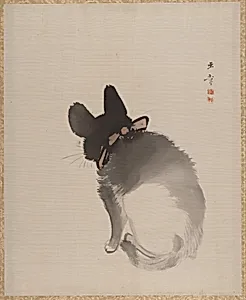
猫図|Cat Seen from Behind
ca. 1887–92
Medium
Album leaf; ink and color on silk
Dimensions
13 1/2 x 10 7/8 in. (34.3 x 27.6 cm)
Classification
Paintings
Culture & Period
Japan · Meiji period (1868–1912)
Department
Asian Art
Museum
Metropolitan Museum of Art, New York, NY
Credit
Charles Stewart Smith Collection, Gift of Mrs. Charles Stewart Smith, Charles Stewart Smith Jr., and Howard Caswell Smith, in memory of Charles Stewart Smith, 1914
Accession Number
14.76.61.87
Rights
Public Domain
Tags
Art Historical Context
In "Cat Seen from Behind," Japanese artist Kawabata Gyokushō offers a playful yet intimate glimpse of a feline companion during the Meiji period (1868–1912), a time when Japan balanced rapid modernization with the preservation of traditional arts. Created around 1887–92 as an album leaf, the small-scale painting invites close viewing, capturing the cat’s rounded form and expressive posture from an unusual rear angle that emphasizes texture and subtle movement. Painted in ink and color on silk, the work showcases the luminous quality of this traditional medium, where delicate washes and fine brushwork bring the subject to life with quiet charm. Album leaves like this were often part of personal collections, allowing viewers to appreciate everyday subjects with fresh eyes. Gyokushō’s choice of a simple domestic scene reflects the enduring cultural affection for cats in Japanese art, symbols of companionship and good fortune. This piece, now in the Metropolitan Museum of Art’s Asian Art collection, highlights the period’s blend of continuity and innovation in painting. Its modest dimensions—13½ by 10⅞ inches—make the cat feel both approachable and endearing, encouraging visitors to pause and smile at its quiet presence.